How To Know What Scales To Start Learning
By Joshua LeBlanc
When it comes to learning scales it can be very overwhelming at first as to which scales you should start with or how to even begin with them. There’s a lot of debate over which scales you should start with as well as how to play them so this article is here so you can learn a bit about which approach will be correct for you.
What are scales?
In a nutshell, scales are just a series of notes that are organized to a specific criteria. Most scales are in a pattern consisting of whole steps and half steps but some scales will use wider intervals. You may have heard of scales such as the Major scale, the Minor scale, the Pentatonic scale, or others. We tend to use these scales to create melodies as well as determine harmonies but we can also use them in guitar playing for improvising and creating solos as well as creating riffs.
On guitar, one advantage that we have is that for many scales you can learn a single pattern to play that scale and then just move it around the fretboard in order to adapt it to the key you want to play in.
Which scales should I learn?
When it comes to learning scales this can be a tricky situation because many people will suggest that you start with certain scales if you play a certain genre of music, or they may tell you to learn this scale because it’s what they started with or that they believe it’s easier to learn it.
In my experience, I have found that learning the Major scale and the Minor Pentatonic scale first will be the most useful for any player regardless of the style of music that they play.
Both scales can be utilized in most genres when you know how to apply them to the genre. Many people will argue that if you’re playing metal you should learn the Minor Scale first or if you’re playing country music you would be better off learning the Major Pentatonic scale. Both arguments are valid however they miss the bigger picture.
For instance, if you start from the second note of the Minor Pentatonic scale you are essentially playing the Major Pentatonic scale. i.e. If you’re playing the A Minor Pentatonic scale, starting from the second note (“C”) and then continuing the Minor Pentatonic scale from there will give you the same sound as C Major Pentatonic because they are the same scale in a sense. If you were to analyze the notes between the two scales you’ll find that they are the same, just the starting point changes.
The same situation is true with the Major scale. Just play the same notes but start from the sixth note of the scale and it will be that note Minor. i.e. If you play an E Major Scale it has the same notes as C# Minor.
From those starting points it’s easy to start learning the scales you need to learn.
If that went over your head that’s ok. It’s a lot of information.
This is why the guitar lessons we offer at Lafayette School of Guitar help break all of this down.
How do I recognize these scales in riffs?
So assuming you have a scale pattern down let’s discuss how you can use this to break down a riff a bit similar.
Let’s discuss the primary riff of Crazy Train by Ozzy Osbourne, played by Randy Rhoads.
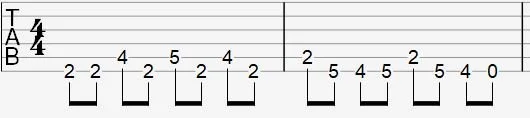
As you can see in the riff at first glance it looks like a mess of notes. So let’s plot out all the notes onto a fretboard diagram.
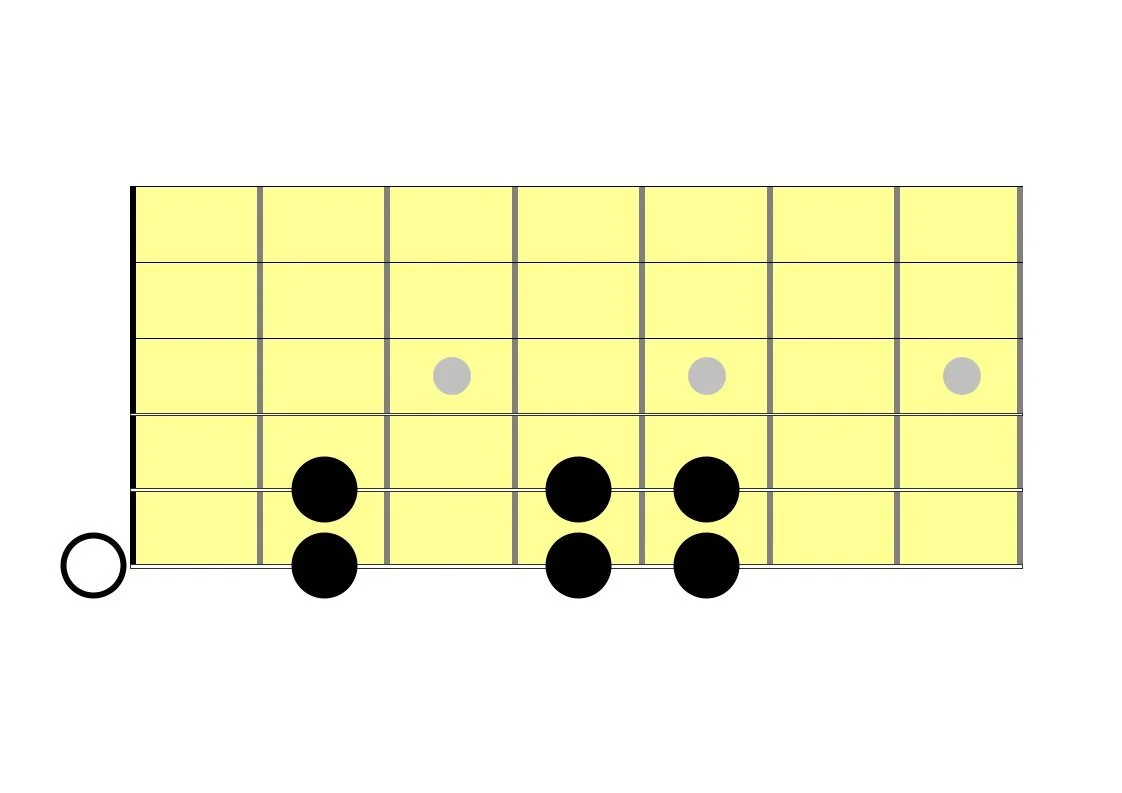
If you know this scale without looking at the next diagram awesome. But let’s look at this diagram next to the scale it’s based off of.
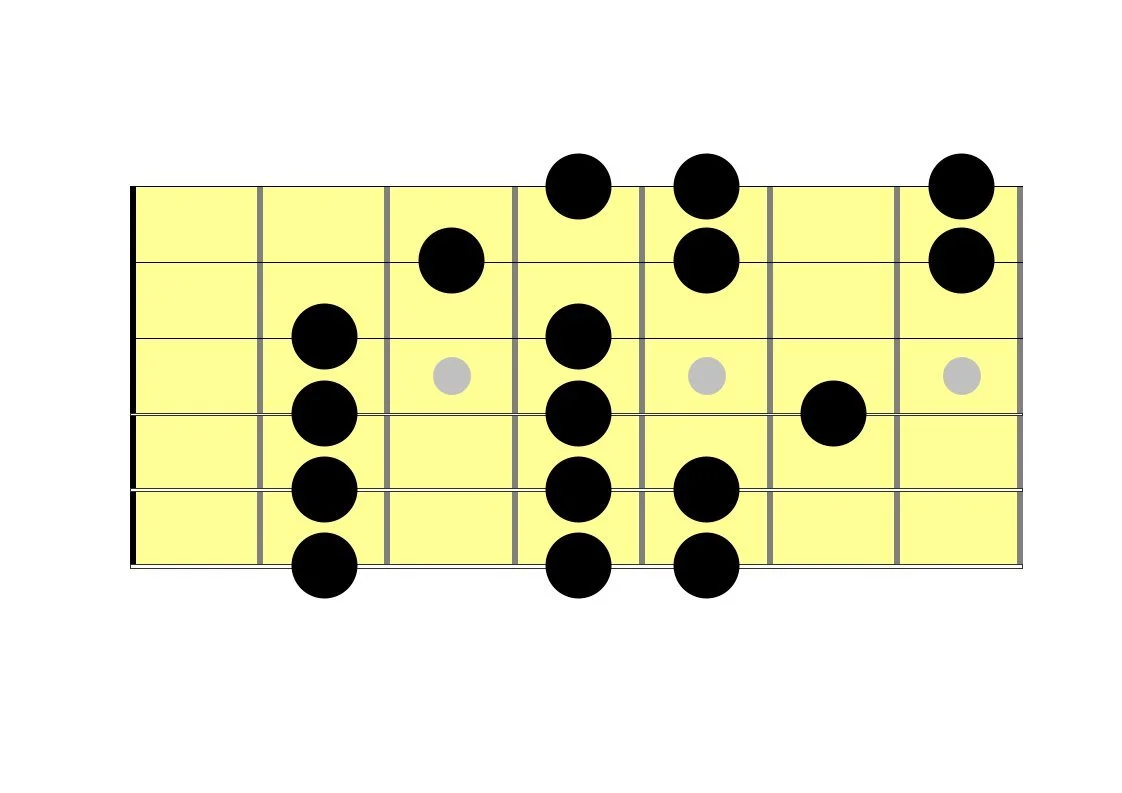
Seeing these two diagrams side by side we can see that this riff is just based off of a F# Minor Scale.
That was really cool! How do I get better at this?
There’s several ways to work on this but I’ll give you two.
Option 1: Study as many scales as you can on your own. Spend a lot of time trying to memorize them all and be able to shift between the various shapes as well as understand what happens in more advanced riffs such as modulations, chromaticism, etc.
Option 2: Have an experienced guitar teacher show you how to utilize all this information in a quick and effective strategy to get you to your playing goals a lot sooner.
Joshua LeBlanc is the owner and lead instructor at Lafayette School of Guitar which specializes in guitar lessons in Lafayette, LA.